
Menu
Cooperative and Work-Integrated Education (CWIE)
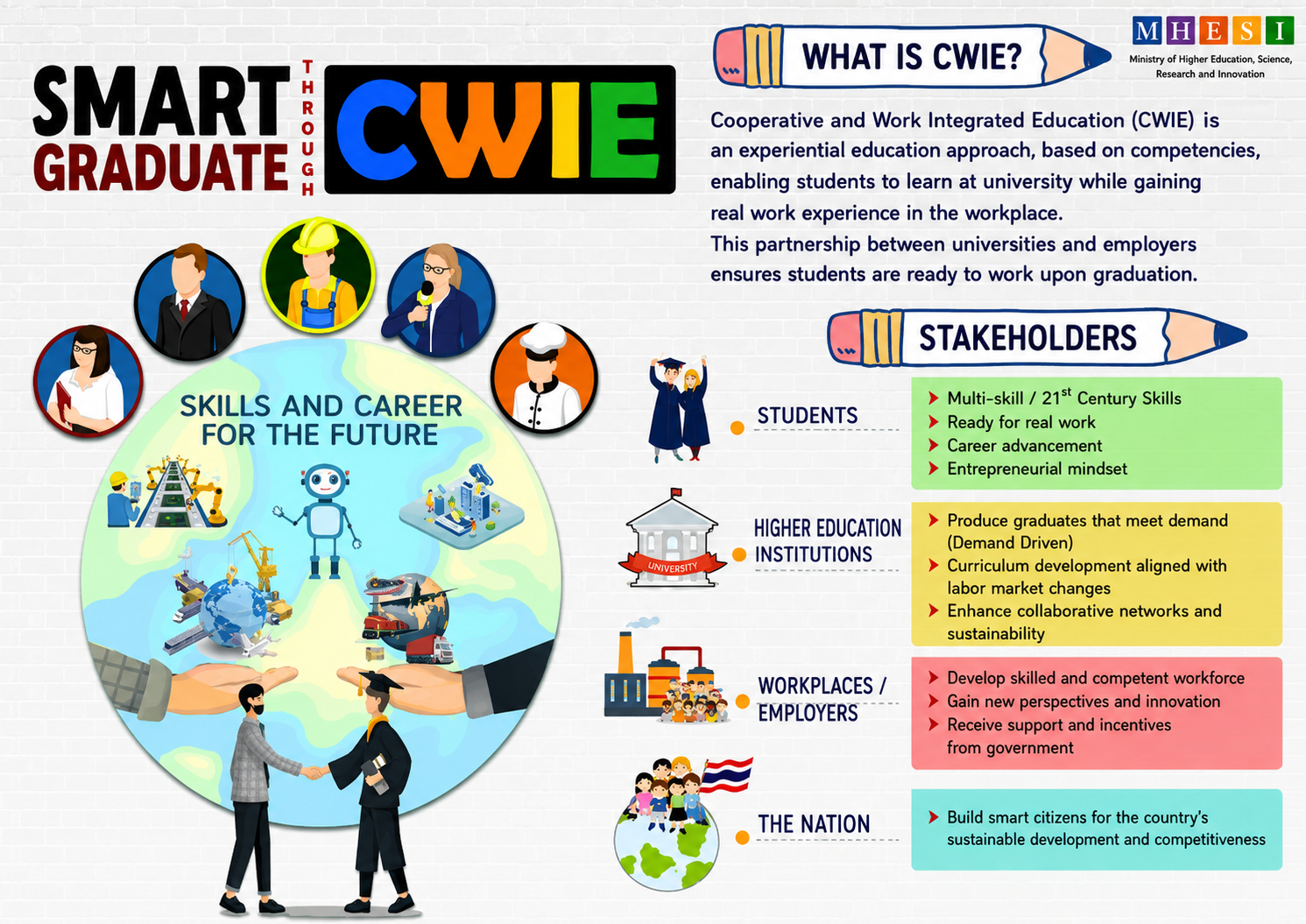
Cooperative and Work-Integrated Education (CWIE) is an educational approach based on Experiential Education and Competency-Based Education, enabling students to combine academic study at higher education institutions with practical work experience in workplaces. The objective is to equip students with the competencies required to enter the workforce immediately upon graduation (Ready to Work). This approach is founded upon collaboration between higher education institutions, as providers of education, and employers, as users of graduates (University–Workplace Engagement).
สหกิจศึกษาและการศึกษาเชิงบูรณาการกับการทำงาน เป็นแนวคิดของการจัดการศึกษาเชิงประสบการณ์บนฐานสมรรถนะให้นักศึกษาได้เรียนในสถาบันอุดมศึกษาควบคู่กับการไปปฏิบัติงานจริง ในสถานประกอบการเพื่อให้นักศึกษามีสมรรถนะพร้อมสู่โลกแห่งการทำงานจริงได้ทันทีหลังสำเร็จการศึกษา โดยความร่วมมือระหว่างสถาบันอุดมศึกษาฝ่ายผลิตและสถานประกอบการฝ่ายผู้ใช้บัณฑิต
CWIE Curriculum Framework and Process (แนวทางและกระบวนการจัดหลักสูตร CWIE)
The systematic and standardized implementation of CWIE curricula should be conducted in accordance with the Manpower Demand-Driven Education Platform for Employability and Career Development through Cooperative and Work-Integrated Education (CWIE): University–Workplace Engagement. This platform comprises five key processes driven through quadruple-helix collaboration among higher education institutions, government agencies, private-sector organizations, and local communities, as follows:
การจัดหลักสูตร CWIE อย่างเป็นระบบและมีมาตรฐาน จะต้องดำเนินการตามแพลตฟอร์ม Manpower Demand Driven Education Platform for Employability and Career Development through Cooperative and Work Integrated Education (CWIE): University – Workplace Engagement ซึ่งมีกระบวนการสำคัญ 5 กระบวนการ ขับเคลื่อนภายใต้ความร่วมมือแบบจตุภาคี (สถาบันอุดมศึกษา หน่วยงานภาครัฐ/เอกชน และชุมชน ท้องถิ่น) ดังนี้
1. Information: This process focuses on providing information to establish a shared understanding among students, higher education institutions, and external organizations regarding CWIE concepts, standards, management practices, and benefits. It aims to foster a common vision and contribute to increasing both the quantity and quality of graduates who possess competencies aligned with the needs of students and employers.
เป็นการให้ข้อมูลเพื่อสร้างความรู้ความเข้าใจที่ตรงกันของนักศึกษา สถาบันอุดมศึกษาและหน่วยงานภายนอก เกี่ยวกับแนวคิด มาตรฐาน การบริหารจัดการและประโยชน์ของ CWIE โดยมุ่งหวังให้เกิดอุดมการณ์ร่วมและขยายผลไปสู่การเพิ่มปริมาณและมาตรฐานการผลิตบัณฑิตที่มีสมรรถนะและตรงตามความต้องการของนักศึกษาและผู้จ้าง
2. Matching: This process creates opportunities for matching demand and supply through the CWIE database maintained by the Office of the Permanent Secretary, Ministry of Higher Education, Science, Research and Innovation. The database facilitates access to and exchange of information through electronic systems, including curriculum information, student numbers, workplace locations, job positions, targeted competencies, compensation and benefits, as well as graduate employment outcomes. It serves as a centralized database for policy-making and strategic planning purposes.
เป็นการสร้างเวทีจับคู่ความร่วมมือระหว่าง Demand และ Supply โดยผ่าน ฐานข้อมูล CWIE ของสำนักงานปลัดกระทรวงการอุดมศึกษา วิทยาศาสตร์ วิจัยและนวัตกรรม เพื่ออำนวยความสะดวกในการศึกษาและค้นหาข้อมูลซึ่งกันและกันผ่านระบบอิเล็กทรอนิกส์ เช่น ข้อมูลหลักสูตร จำนวนนักศึกษา สถานที่ปฏิบัติงาน ตำแหน่งงาน สมรรถนะที่จะร่วมผลิต ค่าตอบแทน/สวัสดิการที่นักศึกษา จะได้รับรวมทั้งติดตามภาวะการมีงานทำของบัณฑิต ซึ่งเป็นฐานข้อมูลกลางและเป็นข้อมูลที่ใช้เพื่อประโยชน์เชิงนโยบาย
3. Co-designing and Implementation: The core of CWIE lies in the development of student competencies. Once partnerships are established, both higher education institutions and external organizations collaboratively design curricula, learning outcomes, competency frameworks, and management systems. Responsibilities are clearly defined, including student preparation before workplace placement, faculty supervision systems, workplace mentoring systems, competency assessment systems, compensation and welfare arrangements, and occupational safety measures.
หัวใจสำคัญของ CWIE คือ สมรรถนะของนักศึกษาเมื่อจับคู่ความร่วมมือแล้ว ทั้งสองฝ่ายจะต้องร่วมกันออกแบบหลักสูตรการเรียนการสอนและผลลัพธ์นักศึกษา ในรูปของสมรรถนะและระบบบริหารจัดการ บทบาทหน้าที่ของแต่ละฝ่าย เช่น การเตรียมความพร้อมนักศึกษาก่อนไปปฏิบัติงาน ระบบคณาจารย์นิเทศ ระบบพี่เลี้ยงในหน่วยงานภายนอก ระบบประเมินสมรรถนะ ระบบค่าตอบแทน สวัสดิการ ความปลอดภัย เป็นต้น
4. Assessment and development: This process involves reviewing and evaluating student learning outcomes and competencies, as well as management systems and operational challenges. The results are utilized for continuous improvement and development in accordance with the PDCA (Plan–Do–Check–Act) quality cycle.
เป็นการสอบทาน การประเมินผลลัพธ์นักศึกษาหรือสมรรถนะนักศึกษา รวมทั้งระบบบริหารจัดการ ปัญหาอุปสรรค เพื่อการปรับปรุงแก้ไขและพัฒนาตามวงจร คุณภาพ PDCA
5. Outreach Activities: This process focuses on extending and enhancing the value of CWIE for students, higher education institutions, and external organizations. Examples include future career development initiatives, International CWIE programs, entrepreneurship development, and collaborative research projects aimed at upgrading organizational capabilities through deeper partnerships with higher education institutions.
เป็นการต่อยอดและยกระดับ CWIE เพื่อเพิ่มคุณค่าให้กับนักศึกษา สถาบันอุดมศึกษาและหน่วยงานภายนอก เช่น การพัฒนาอาชีพแห่งอนาคต (Career for the Future) การจัดInternational CWIE การยกระดับนักศึกษาเป็นผู้ประกอบการ การยกระดับหน่วยงานภายนอกด้วยการวิจัยเชิงลึกร่วมกับสถาบันอุดมศึกษา เป็นต้น
เป้าหมายการขับเคลื่อน CWIE (Objectives of CWIE Development)