

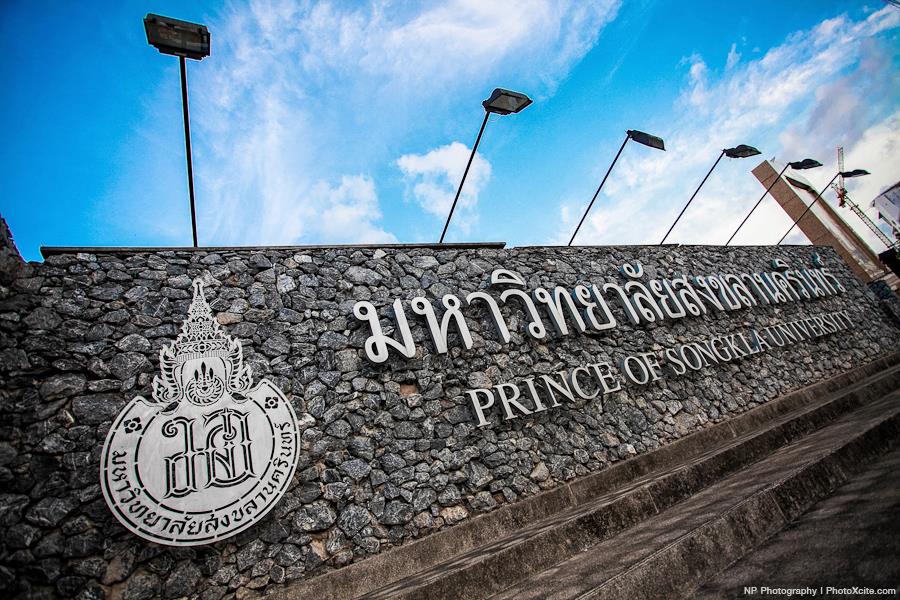
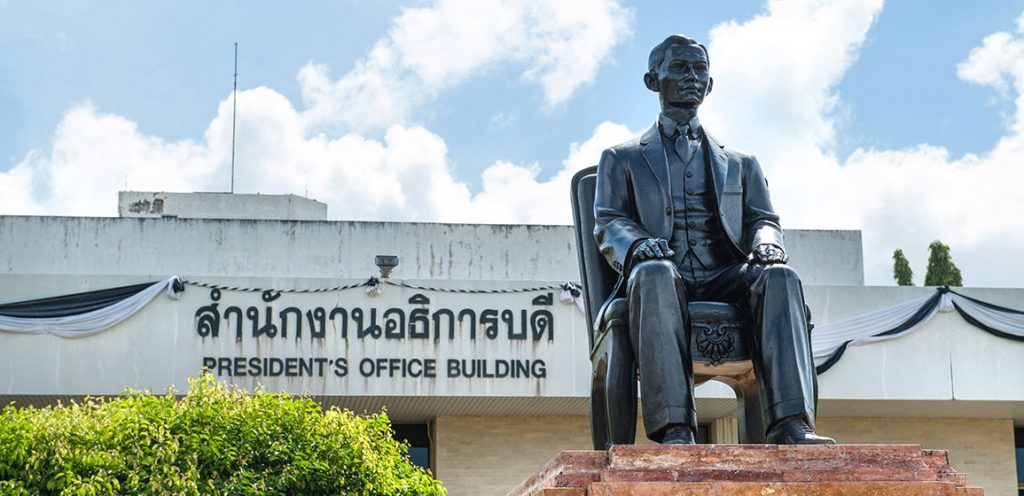
Prince of Songkla University (PSU), a public autonomous university established in 1967 as the first university in southern Thailand, consists of five campuses offering various programs of education consistent with the needs of their communities. Moreover, PSU also comprises 39 faculties, colleges and institutes, four hospitals, and more than 40 excellence and research centers, all committed to academic excellence, strong social responsibility, and active engagement in community services. The central aims of the university are to raise general education standards and support regional industry and development. Moreover, the university aims to establish excellence in research and teaching, to provide academic services to communities, and to take an active role in the preservation of national heritage in arts and culture, especially for those from southern Thailand. Therefore, as a leading research university in Asia, PSU has contributed significantly to the development of the country and consistently turned out well-qualified graduates of high professional standing.
Prince of Songkla University (PSU) was established under the Southern Development Plan policy with the intention to become the leading university in the southern region of Thailand, in terms of delivering graduate students, academic research and academic services whilst appreciating and maintaining arts and culture. The university’s management aims to develop and deliver graduate students that empower the country and also hold on to Thailand’s educational guidelines which focus is placed upon graduates equipped for the real world.
PSU’s educational philosophy is based on Progressivism, with the aim to develop students in all aspects and prepare them to thrive in their respective societies. This includes assisting them in adapting to unpredictable circumstances by using learning process methods and treating students as the center of attention. Various learner needs, such as problem solving, self-researching processes and taking action inside and outside of the classroom, are considered fundamental to PSU’s “sustainable learning” approach. This led to the formulation of the idea that “change brings improvement” – a type of learning where students are able to apply these methods both at the university and in real-life environments. PSU aims to provide their students with a lifelong learning approach.
The above-mentioned rationale forms the basis of outcome-based education, developing curricula and the various learning processes listed as follows. Active Learning means learning from a variety of activities and actions. Problem-based Learning describes learning based on problems-solving, e.g. through case studies. Project-based Learning refers to learning based on projects such as assignments and assessments. Service Learning means learning by serving the community. Prince of Songkla University aims to apply these principles successfully, as guided by the motto of the “Prince of Songkla”, His Royal Highness Prince Mahidol Adulyadej: “Our Soul is for the Benefit of Mankind”.
Prince of Songkla University is an educational institution focusing on innovation and society with academic excellence, aiming to become one of the top five universities in ASEAN in 2027.
- To build academic leadership and innovation through research for developing the country in general and the southern region of Thailand in particular, creating a linkage to the society and global network;
- To produce globally-recognized graduates with academic and professional competence, honesty, discipline, public service mindset and practical skills for the 21st century, based on experience gained from practice;
- To develop the university into a society of learning based on a multi-cultural background and sufficiency economy principles, and allow the general public easy and convenient access to learning and gain from whatever forms and sources of knowledge are available at the university.
A. To create value for research works by organizing and distilling them into excellent specialized core-knowledge with a view to produce tangible innovation to drive the future, and to drive Prince of Songkla University into a leading university in the region.
Key Performance Indicator (level of goals)
– Number of patents/ copyrights.
– Ranking status of the university, both university-wise and discipline-wise.
– The keeping up of the university presence in the circle of institutions of excellence in tertiary education.
B. To search for knowledge and wisdom to create a wealth of academic resources which is essential for a sustainable development to reach the status of a leading research-intensive university; and to engage in transferring of knowledge and technology to community in order to strengthen and raise the community potential, and to increase the competitiveness of the country in the international level.
Key Performance Indicator (level of goals)
– Number of published research papers/person/year.
– Number of staff actively engaged in research.
C. To produce graduates who are knowledgeable about their professions, behave in accordance with good Thai moral value, possess life skill and public consciousness, competent to compete in international job market.
Key Performance Indicator (level of goals)
– Percentage of success in jobs finding and self employ.
– Level of satisfaction of employers.
– Percentage of graduates who work outside the country.
D. To create academic context which is widely opened and easily accessible for acquisition of knowledge, in a variety of dimensions, formats and platforms whose contents are diversely and comprehensively integrated in order to develop local human resources into a society of learning and wisdom.
Key Performance Indicator (level of goals)
– Number of online programs which are presented in the form of virtual university.
E. To utilize the strategy of proactive management consistent with the administration of multi-campus university, and to operate the system within the practical framework of good governance with emphasis on efficiency, transparency and accountability.
Key Performance Indicator (level of goals)
Level of financial stability, evaluate from,
– Ratio of current revenue/accumulated revenue.
– Rate of increase of revenue.
F. To increase competency and to re-engineering the university culture so as to be an institution of learning which accumulates and manages knowledge in a manner which leads to a lasting and stable development.
Key Performance Indicator (level of goals)
– Sixty percent of all academic staff are holders of doctoral degree/equivalent in 2016.
Several outstanding programs, researchers, rankings, and achievements have made PSU well-known and admired as a leading educational institution, not only in Thailand, but across the ASEAN Region. A positive reputation, combined with the contributions of our high-quality researchers and academics, results in the academic excellence of PSU in many disciplines attracting students from all over the world. Therefore, among about 200 universities in Thailand, PSU is placed as the following indicators show:
- We are ranked 5th in Thailand by US NEWS and WORLD REPORT.
- We are ranked 5th in Thailand and 188th in Asia by 2018 QS (Quacquarelli Symonds) Ranking.
- Nationally, PSU is ranked 4th for Life Sciences and Medicine, 5th for IT&Engineering, Natural Resources, and Arts and Humanities, and 6th for Social Sciences.
- Worldwide, PSU is ranked in the top 151-200 in Agriculture and top 401-500 in Medicine by 2018 QS Ranking.
- 7th in Thailand for Research and Innovation by SCIMAGO;
- 188th by 2016 THE-BRICS;
- Nationally, URAP 2013-2014 Field Ranking: 3rd in Chemical Sciences, 5th in Medical and Health Sciences, 6th in Engineering and Biological Sciences;
- At present, 50%+ of lecturers hold doctorate degrees and more than 200 are pursuing their Ph.D. study. We should soon have 60% of all lecturers with doctorate degrees.
- PSU is ranked 4th in Thailand for research publications in international journals, which reflects our capability to share our knowledge with humankind.
- We were ranked several times 1st in Thailand and 2nd in Southeast Asia by Webometrics.
- We scored 4.65 out of 5 from the national quality assessment administered by the Office for National Education Standards and Quality Assessment of Thailand – the highest among Thai State universities.
- One of our two Confucius Institutes was given the award of Confucius Institute of the Year 2009 by Hanban (the Office of Chinese Language Council International) for its achievements and contributions to promote the Chinese language and culture and for its outstanding Chinese teaching activities. It was also given the award of the 2008 Overseas Chinese Test Center of the Year, for its effective management and increasing number of applicants for HSK (Hanyu Shuiping Kaoshi, or the Chinese Proficiency Test).
On September 22, 1967, His Majesty the King graciously granted the University the name “Prince of Songkla University” in honor of his beloved father, His Royal Highness Somdej Chao Fa Mahidol Adulyadej Kromma Luang Songkla Nakarin. In commemoration of this auspicious occasion, the university has since proclaimed September, 22 of every year as “Songkla Nakarin Day”, one of the important dates in the calendar of yearly events of the university. A brief history of the University and the biography of the University namesake, His Royal Highness the King’s father may be found through the links shown below.
The Foundation/ Funds established by or affiliated to Prince of Songkla University are as follows
- Prince Mahidol’s 100th Years Special Fund: In commemoration of the auspicious occasion of 100th anniversary of the birth of His Royal Highness Prince Mahidol Adulyadej, whose initiative and efforts produced the strong foundation on which modern medical and public health education in Thailand is based such that His Royal Highness has been honored as “The Father of Modern Medicine and Public Health of Thailand”, Prince of Songkla University has launched “Prince Mahidol’s 100th Years Special Fund” in 1992.
- Prince of Sonkla University Foundation has been established in order to support and promote the education and related activities of Prince of Songkla University, to provide financial support for students, to support research and to provide financial aids for faculty members who need to further their education, to cooperate with other nonprofit organizations in the matters which are not politically related.
- Princess Mother’s 100th Year Honored Fund, Faculty of Dentistry has been established to commemorate the 100th anniversary of the birth of the Princess Mother. Its principal objective is to provide and promote dental care for the people, especially for the rural communities, through the volunteer services organized by the Faculty of Dentistry.