PSU upcycles graduation banners into eco-friendly bags
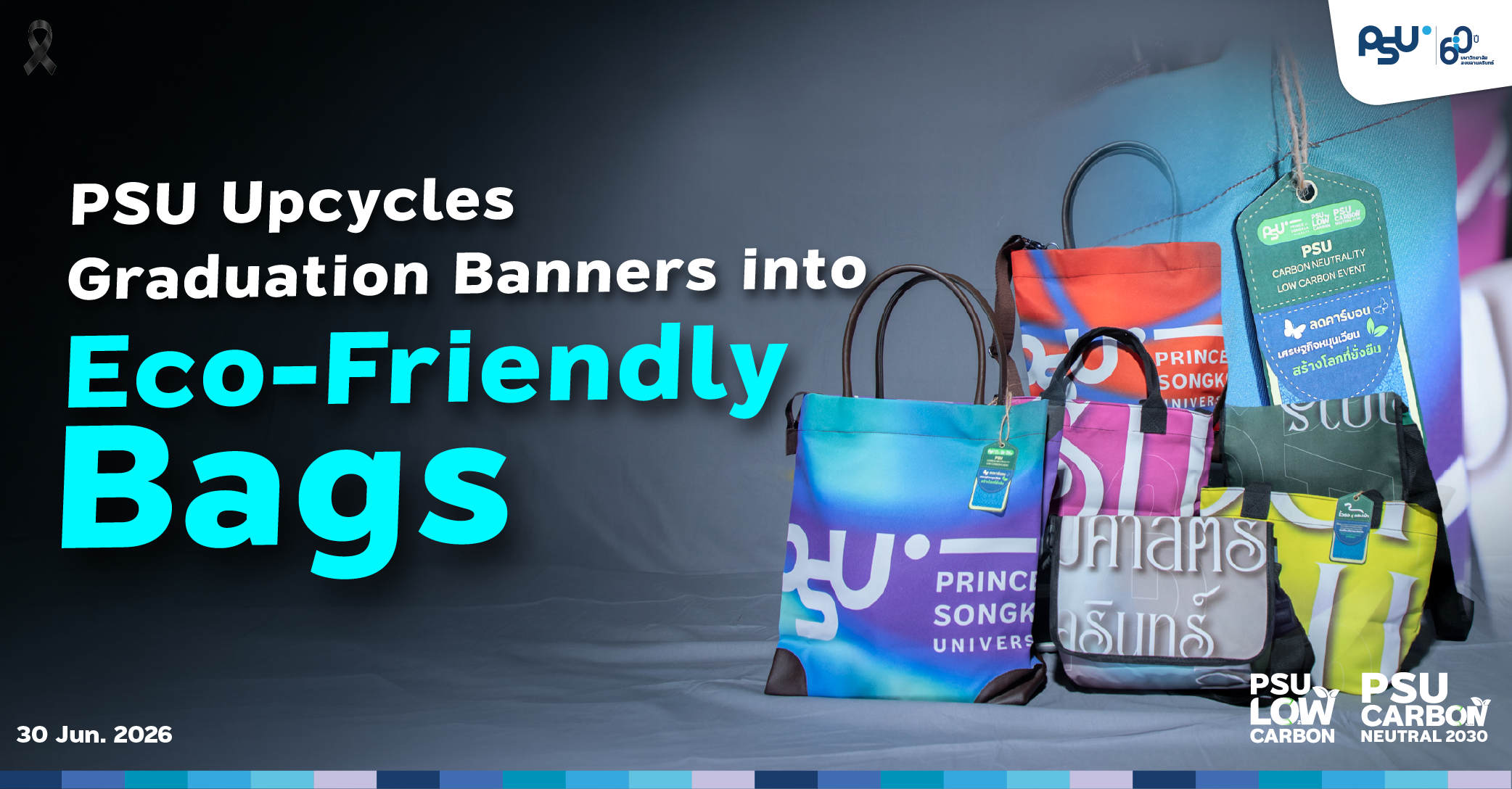
The congratulatory banners that once lined the campus of Prince of Songkla University, Hat Yai Campus, welcoming graduates on one of the proudest days of their lives, may have seemed to fulfill their purpose after the commencement ceremony. Instead of becoming waste, however, they have been given a second life as stylish upcycled bags—combining meaningful memories with sustainable design while supporting the University's journey toward carbon neutrality.
More than an environmental initiative, the project transforms discarded materials into value-added products through upcycling. The banners, once symbols of celebration, have been reimagined as distinctive fashion accessories that preserve cherished memories, reduce waste, and minimize the use of single-use materials. The initiative reflects PSU's ongoing commitment to sustainability through practical action.
Prof. Dr. Sumate Chaiprapat said the project is part of the University's policy to make better use of surplus materials while reducing carbon emissions. It complements PSU's Carbon Event concept implemented throughout the 2024 commencement ceremony. As part of the initiative, the University promoted the use of electric vehicles (EVs), encouraged graduates and their families traveling from the same areas to carpool, replaced plastic packaging with paper alternatives, and introduced digital commencement booklets to reduce resource consumption.
Dr. Sumate said the bags represent more than recycled materials. They symbolize graduates' achievements while encouraging environmental awareness among students. The University has also integrated climate change and sustainability into its curriculum to help prepare future graduates to contribute to a more sustainable society, alongside the University's broader commitment to environmental and social responsibility.
He added that climate change is a challenge requiring cooperation from every sector. As a higher education institution, PSU plays an important role in advancing knowledge through teaching, research, and community engagement. The upcycled bag project demonstrates how discarded materials can be transformed into products with renewed purpose while supporting the University's goals of sustainability, carbon neutrality, and ultimately net-zero greenhouse gas emissions.
Ms. Pornsuree Konanta said the bags carry value beyond recycling. They not only commemorate graduates' achievements but also reflect the University's commitment to environmental stewardship, aligning with Chevron's approach to responsible business and sustainable development.
She praised PSU for continuously seeking innovative ways to protect the environment while contributing to Thailand's transition toward a low-carbon society. She noted that the bags showcase creativity, practical design, and emotional significance, making them an inspiring example of sustainable innovation.
Ms. Pornsuree also highlighted Chevron's decade-long partnership with PSU in promoting low-carbon initiatives in Songkhla, beginning with biogas projects for rubber cooperatives, followed by support for Thailand's first Carbon Event commencement ceremony, and most recently the Carbon Neutral Event Workshop held in May.
She concluded that Chevron is honored to collaborate with PSU, describing the partnership as an opportunity not only to support the University's environmental efforts but also to learn and grow together in building a more sustainable future.
Once a symbol of celebration, the graduation banners have found new purpose as products with lasting value and meaning. The project demonstrates that meaningful environmental action does not always require large-scale changes—it can begin by recognizing the value of existing resources and giving them a new life through sustainable innovation.